
Key Takeaways
- Choose CC for daytime travel and 3A for a comfortable, budget-friendly overnight journey.
- Vande Bharat and Shatabdi are popular daytime options for faster, comfortable travel.
- Book tickets through IRCTC and check your PNR status before travelling.
- Choose trains over flights for shorter routes or overnight journeys when you want to enjoy the journey itself.
- Always keep your itinerary flexible as train delays can happen & always double-check your station and coach details.
For many visitors, train travel in India is more than just a way to get from one city to another. It is a chance to see the country at a slower pace, sharing a compartment with families headed home, vendors calling out chai at every stop. Fields and small towns pass by that you’d otherwise fly straight over.
Indian Railways connects thousands of towns and cities across the country, with everything from modern high-speed trains to long-distance overnight services. For a first-time visitor, however, the system can seem confusing. Which class should you book? How does ticketing work? Is a train better than flying?
Start with the classes — everything else in your itinerary depends on getting that right.
Indian Train Classes: Which One Should You Choose
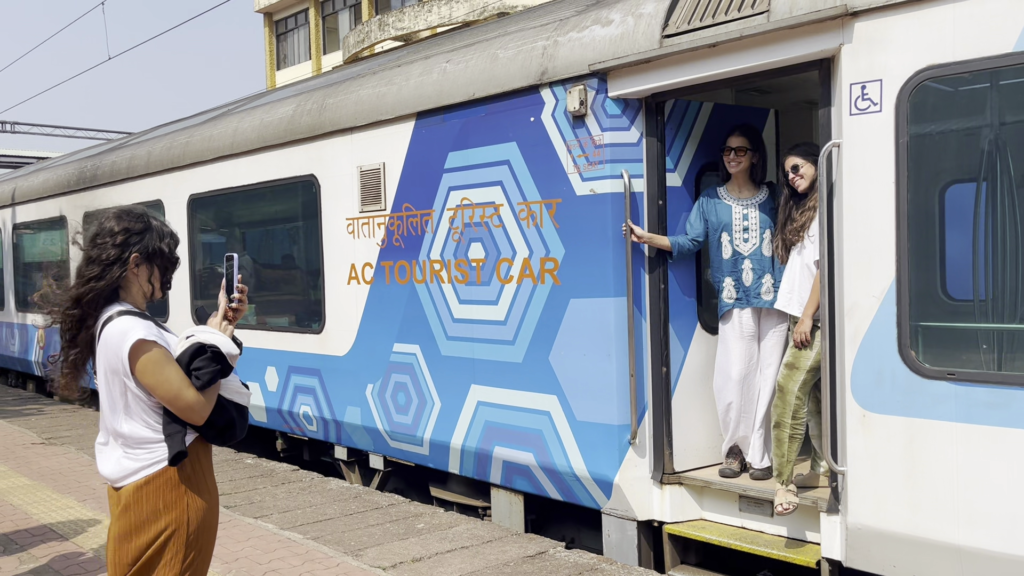
You will come across several classes when booking Indian trains, but foreign travellers generally only need to know a few.
For daytime journeys, the most useful options are AC Chair Car (CC) and Executive Chair Car (EC). Both are air-conditioned, reserved seating classes and are common on modern trains such as Vande Bharat.
For shorter daytime journeys, CC is usually perfectly comfortable. EC offers a more premium experience with wider seating and more legroom. It is a good choice when comfort is a priority.
For overnight journeys, AC 2-Tier (2A) and AC 3-Tier (3A) are the main options worth considering. These have sleeping berths rather than regular seats.
Both are air-conditioned sleeper classes, but 2A offers more space and fewer berths per compartment, while 3A has more berths and is generally more affordable.
For most foreign travellers, 3A is a comfortable way to experience an overnight train on a budget. If you prefer more space and privacy, 2A is the better choice.
For travelers seeking the highest level of privacy and comfort on overnight journeys, AC First Class (1A) is the top-tier choice.
Unlike 2A and 3A, 1A compartments feature lockable sliding doors. The carriages are arranged into two configurations:
- Coupes: Private 2-berth compartments (ideal for couples or solo travelers who secure one).
- Cabins: Private 4-berth compartments.
Note: When booking 1A, you request a Coupe or Cabin preference, but final berth assignments are allocated by Indian Railways when the train chart is prepared.
Choosing Your Train: Types & Top Tourist Routes
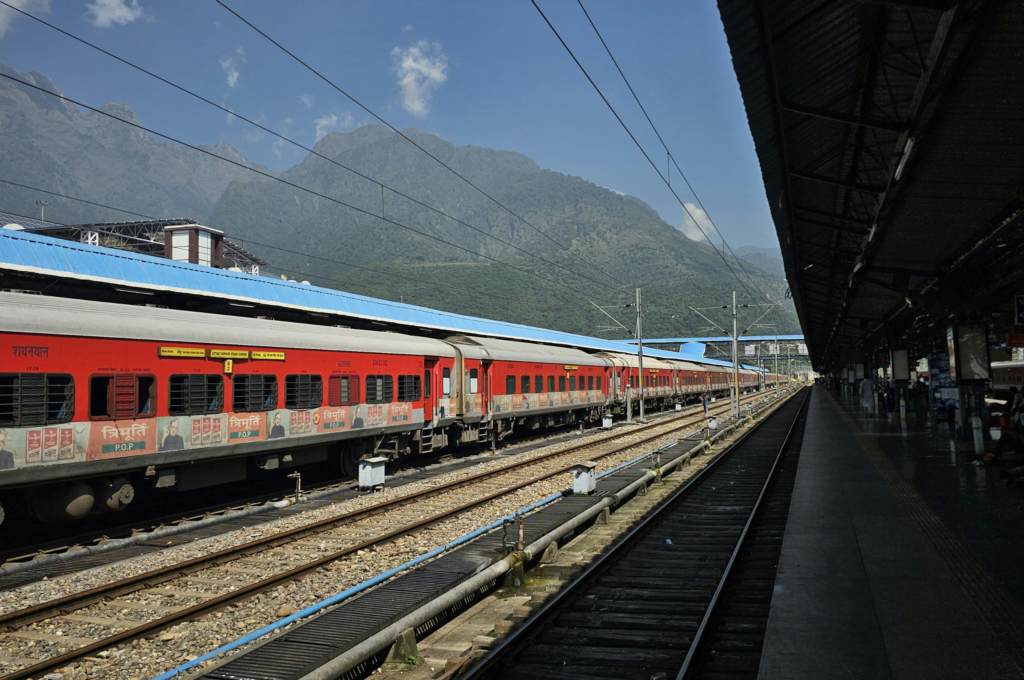
Premium Day Trains: Vande Bharat & Shatabdi
For shorter and medium-distance journeys, Vande Bharat Express and Shatabdi Express are two premium daytime trains you are likely to come across. Both offer comfortable air-conditioned seating. They are a convenient choice when you want to travel between destinations without spending a night on the train.
Vande Bharat is India’s newer semi-high-speed train, with modern interiors and Chair Car (CC) and Executive Chair Car (EC) seating. If you’re travelling from Delhi to Agra, for example, a Vande Bharat can get you to the Taj Mahal in time for a day of sightseeing before returning to Delhi. There are also Vande Bharat services connecting destinations such as Delhi–Jaipur, Delhi–Varanasi and Mumbai–Goa, among others.
Shatabdi Express is a well-established premium day-train service and is another comfortable option on several popular routes. Depending on your itinerary, you may find Shatabdi services connecting Delhi–Jaipur, Delhi–Chandigarh or Mumbai–Ahmedabad.
So, if your India itinerary includes the Taj Mahal, Jaipur, Varanasi or Goa, it is worth checking whether a Vande Bharat or Shatabdi fits your route. You get a comfortable few hours of daytime travel instead of sitting through airport check-in, security and boarding, with a proper meal service and reclining seats on top.
For longer journeys, however, an overnight train such as the Rajdhani Express may make more sense. This is especially useful when you want to save a night of accommodation and experience a different side of travelling through India.
Rajdhani Express
In Indian languages, the word Rajdhani means “the capital.” Rajdhani Express trains, as their name implies, link India’s national capital, New Delhi, with major cities and capital cities across the country. These trains are fully air-conditioned and designed for long-distance travel, with sleeping berths available on overnight services. For example, on a longer itinerary such as Delhi to Mumbai, taking a Rajdhani can be a comfortable alternative to flying. It also allows you to experience travelling across India by train.
Intercity Express
For shorter journeys between nearby cities, an Intercity Express may be the more practical choice. These trains connect major cities across India and commonly offer reserved seating, including AC Chair Car on selected services. If you’re travelling between destinations during the day, an Intercity service can be an easy way to move between cities without using a flight.
The important thing is not to choose a train simply because of its name. Check the specific route, departure time, journey duration, and available class before booking.
How to Book Indian Train Tickets?
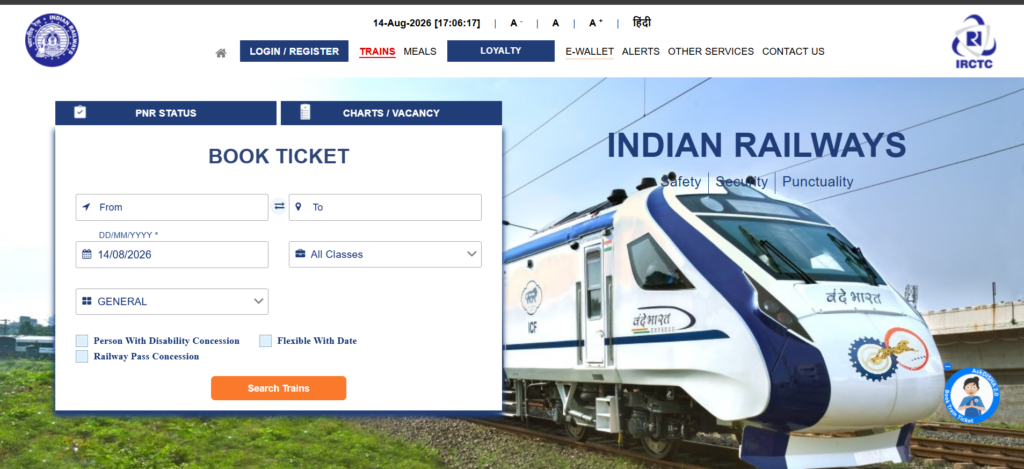
The official online railway booking platform is IRCTC (Indian Railway Catering and Tourism Corporation). Foreign travellers can register as international users and book railway tickets online.
IRCTC also offers a Foreign Tourist Quota (FTQ) for foreign tourists and NRIs holding a valid passport. Under this facility, tickets can currently be booked up to 365 days in advance, while the regular Indian Railways reservation period is 60 days. Passport details are required for foreign tourist bookings, and international debit or credit cards can be used for payment.
The booking process can sometimes feel complicated, particularly when you are trying to coordinate several trains, hotels, and sightseeing arrangements at the same time.
For this reason, many international visitors choose to book their train travel through a travel agent. This can make things much easier when planning a multi-city India itinerary, especially when you need to check different trains, classes, and connections.
A Quick Note on Ticket Status (Waitlist vs. RAC):
Always ensure your ticket status reads Confirmed or RAC (Reservation Against Cancellation) before heading to the station. If you booked an e-ticket and its status remains Waitlist (WL) after the reservation chart is prepared, your ticket is automatically canceled and refunded. You will not be permitted to board the train.
Train vs Flight in India: Which Should You Choose?
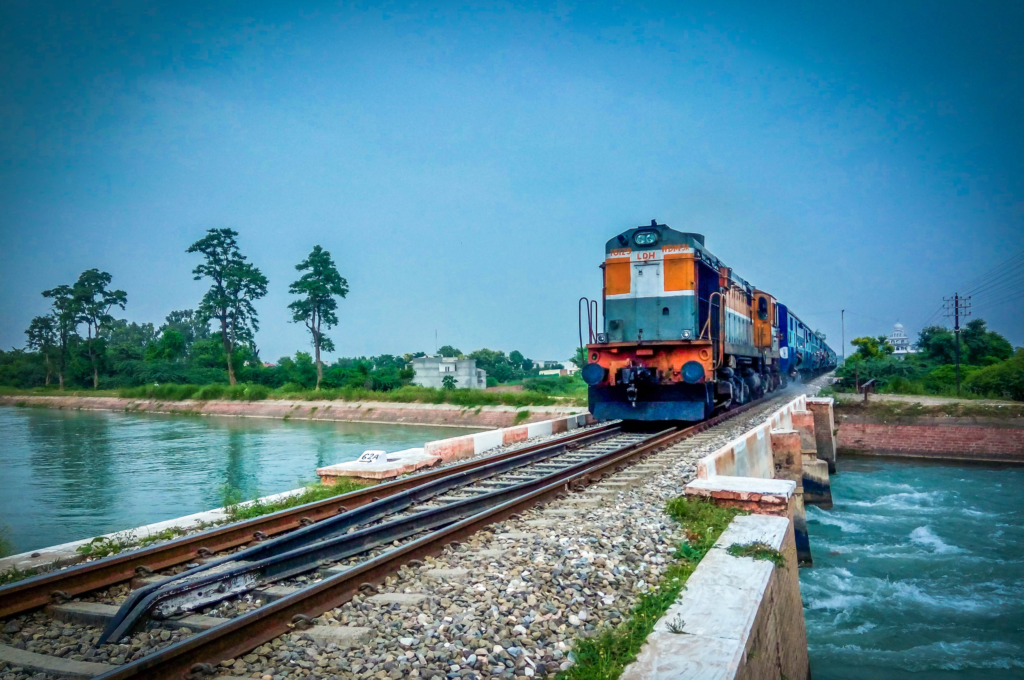
India is a large country, so there is no single right answer.
For very long distances, flying is usually the most time-efficient option. But for shorter routes and overnight journeys, trains can be a far more enjoyable way to travel.
Take the train when you want to see more of the country between destinations, avoid the airport experience, or simply try something that is distinctly Indian.
For example, travelling from Mumbai towards Goa gives you a very different perspective from simply flying between the two cities. Likewise, travelling by train from Delhi to Agra can be a practical and easy part of a Golden Triangle itinerary.
If you’re still planning your itinerary, our guide to planning your India trip can help you put the different destinations and travel options together.
Eating and Drinking Safely on Board
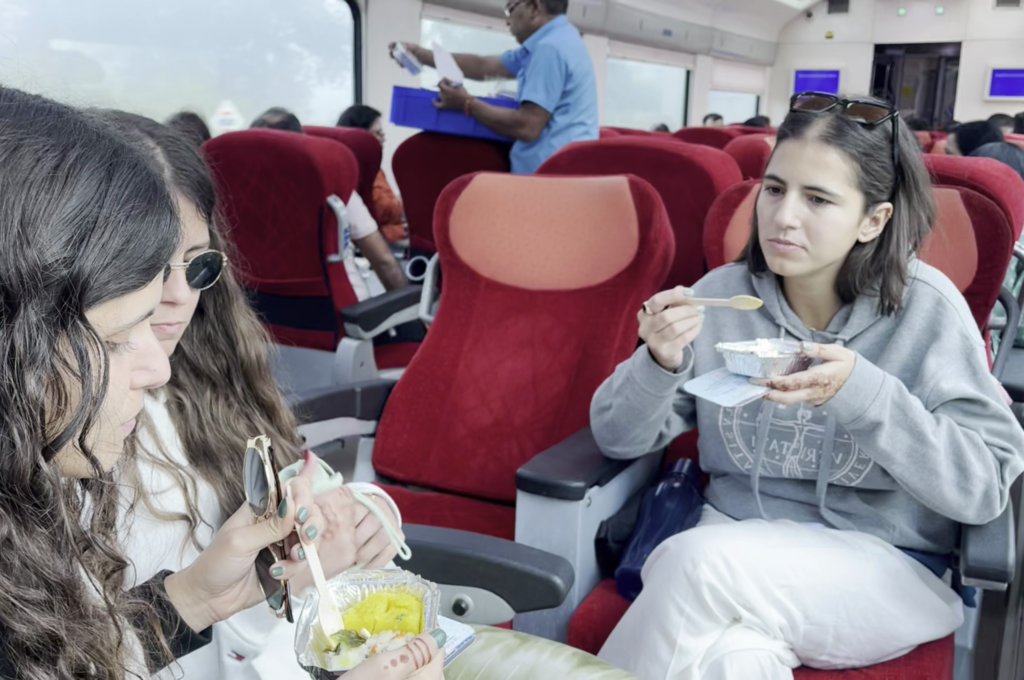
Food is very much part of the journey, and it’s worth knowing how to eat safely on board. On premium trains like Vande Bharat, Shatabdi, and Rajdhani, meals and hot drinks are available as part of the onboard catering service. This depends on the train and food option selected when booking. On other routes, avoid unsealed platform snacks and instead order hot, fresh meals delivered straight to your seat using the official IRCTC Food on Track app. Always stick to sealed bottled water. Look for Indian Railways’ official Rail Neer brand or trusted names like Bisleri and Kinley. Make sure the cap seal is intact before drinking.
A Few Things to Know Before You Travel
Train stations in major Indian cities can be large and busy, so give yourself enough time to find your platform and coach. Your ticket will show your train number, boarding station, class, and seat or berth details.
It is also worth remembering that Indian trains can be delayed. While many services operate reliably, delays can happen because of weather, congestion, operational issues, or the sheer scale of the railway network.
For this reason, avoid planning a very tight connection between a long-distance train and an important flight or other non-flexible booking.
Downloading a live-tracking app like Where is my Train allows you to easily check your train’s real-time location, schedule, and delay status right from your phone.
Don’t forget to double-check station codes. Major cities often have multiple stations (e.g., New Delhi [NDLS] vs. Hazrat Nizamuddin [NZM] are important stations in Delhi, or Mumbai CST [CSMT] vs. Bandra Terminus [BDTS] in Mumbai).
Your Indian Train Cheat Sheet
Best for daytime travel: CC
More premium daytime option: EC
Best value overnight option: 3A
More spacious overnight option: 2A
Modern trains to look for: Vande Bharat
Premium long-distance trains to/fro Delhi: Rajdhani
Useful for shorter intercity journeys: Intercity Express
Official booking platform: IRCTC
Foreign Tourist Quota: Available for eligible foreign travellers
Most important tip: Leave some flexibility in your itinerary in case of delays
Travelling by train may require a little more planning than simply booking a flight, but it can also offer something a flight cannot: a window into the country between destinations. For many visitors, that is what makes taking the train in India worth doing.