

Key Takeaways
- Lodhi Colony is famous for the Lodhi art district, India’s open-air public art district, and one of the best places to visit in Delhi.
- The street art in Lodhi Colony highlights themes like culture, identity, sustainability, social change, and everyday experiences.
- Rather than showcasing traditional monuments, the artwork in Lodhi Colony gives visitors a contemporary view of Delhi’s changing cultural identity.
- Plan to spend about 1-2 hours exploring the murals in Lodhi Colony and finding hidden artwork across the area.
- Early mornings and late afternoons offer more pleasant weather and softer lighting for photos.
- Visitors can explore Lodhi Garden and Khan Market for a more complete day in Delhi.
- Visitors exploring the murals in Lodhi Colony can gain deeper insights into the artwork by joining a guided experience.
When travellers think of Delhi, they often imagine Mughal monuments, markets, street food, and centuries of history. Few expect to find giant colourful murals spread across a quiet residential neighbourhood.
Yet that is exactly what awaits at Lodhi Colony — one of Delhi’s most surprising urban spaces, where ordinary walls have become storytelling canvases.
If you are visiting Delhi and looking to experience a different side of the city beyond forts and monuments, Delhi street art deserves a place on your list.
What is Delhi Street Art?
Street art in Delhi has gradually become part of the city’s modern cultural identity. While monuments tell stories of Delhi’s past, murals often reflect its present through culture, diversity, sustainability, identity, and social change.
The best place to experience this is Lodhi Colony, home to India’s first open-air public art district.
Back in 2015–2016, artist Yogesh Saini and the St+art India Foundation helped transform parts of Lodhi Colony into a large public art space. Unlike graffiti, which is often spontaneous or unofficial, much of Delhi’s street art is curated public art — large-scale murals created with permission and designed to engage communities and public spaces.
These murals are more than colourful backgrounds for photographs. They often tell stories about culture, identity, environmental issues, social change, and everyday life in India. While some celebrate local traditions, others encourage conversations about larger global themes.
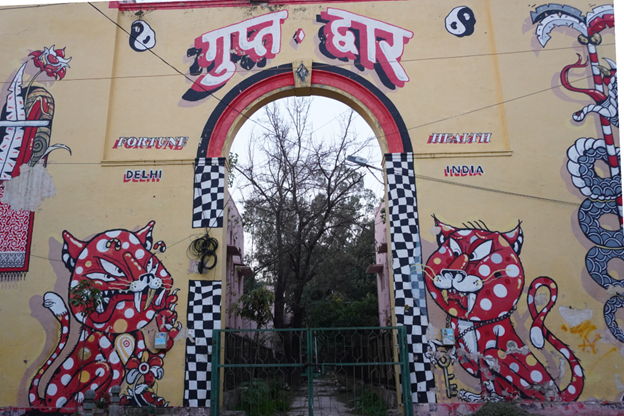
Take Gupt Dwar (Block 16) by Singaporean artists Yok and Sheryo — at first glance, it looks like a playful riot of colour lifted straight from an Indian matchbox. Look closer and you’ll find hidden messages encrypted into the design. Rewarding curiosity, that’s exactly what the street art does
Why Travellers Often Find Lodhi Colony Surprising
Many visitors arrive in Delhi expecting historical landmarks and old-world charm.
Then suddenly, instead of monuments and markets, they find giant walls telling stories through colour, creativity, and contemporary art.
Lodhi Colony feels different.
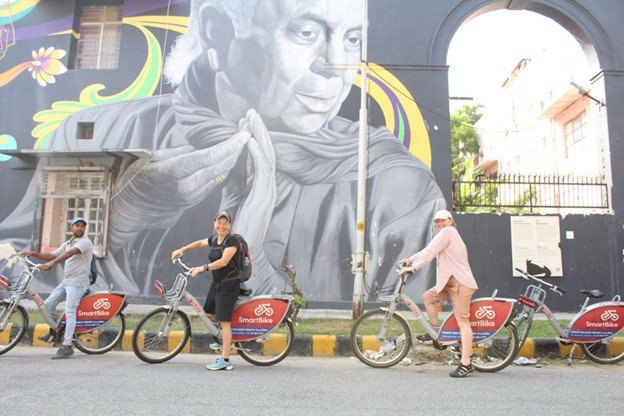
Imagine this — you turn a quiet residential lane, and suddenly there’s a four-storey mural staring back at you. Laundry is drying on a line, cutting right across it. A dog is asleep at the base. The art is monumental, but life continues around it, completely unbothered. That contrast is what stays with you.
It reminds travellers that Delhi is not only historical, but it is also evolving, creative, and deeply contemporary.
And perhaps that contrast is what makes it memorable.
For travellers looking to discover more of the city’s lesser-known side, Delhi has several hidden places beyond its famous monuments and landmarks.
How to Reach Lodhi Colony
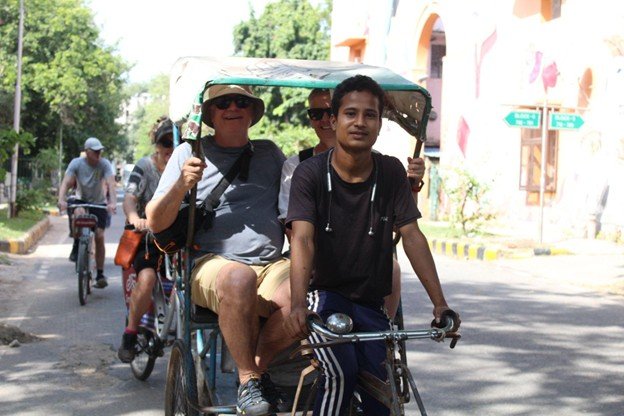
Getting to Lodhi Colony is fairly straightforward.
Nearest Metro Stations:
- JLN Stadium Metro Station (Violet Line) – approximately 10–15 minutes by auto-rickshaw
- Jor Bagh Metro Station (Yellow Line) – approximately 10 minutes by auto
From Rajiv Chowk (Connaught Place):
Around 20–30 minutes by metro and auto, depending on traffic.
From Delhi Airport:
Approximately 35–60 minutes by taxi or metro connection, depending on traffic conditions.
Auto-rickshaws are often the easiest option for the final stretch
Tip: Delhi traffic can vary significantly by time of day, so allow extra travel time if visiting during morning or evening peak hours.
What to Expect During Your Visit
Some murals immediately catch your attention, while others reveal themselves slowly as you wander through the neighbourhood.
Plan for around 1–2 hours to explore comfortably.
Best time to visit:
Early morning or late afternoon, especially during warmer months.
Photography:
Bring your camera or phone fully charged. Golden hour lighting works beautifully.
Slow Down:
Take your time. Some artwork reveals small details only when you slow down.
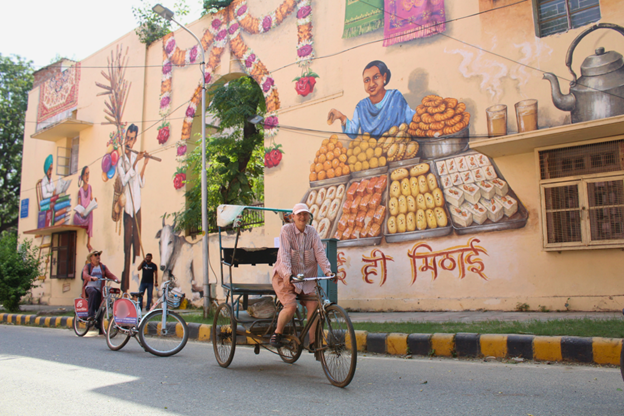
Yip Yew Chong’s Impressions of Lodhi on Block 13 is a good example — it’s the kind of mural you can spend twenty minutes with and still feel like you’ve missed something.
Nearby Places Worth Combining Into Your Day
One of the best things about Lodhi Colony is its location. You can easily combine it with some of Delhi’s most loved spots.
[ Lodhi Art District ] ➔ Walk 10 mins ➔ [ Lodhi Garden ] ➔ Auto 5 mins ➔ [ Khan Market ] (Modern Murals) (15th-Century Tombs) (Cafés & Bookshops) |
Lodhi Garden
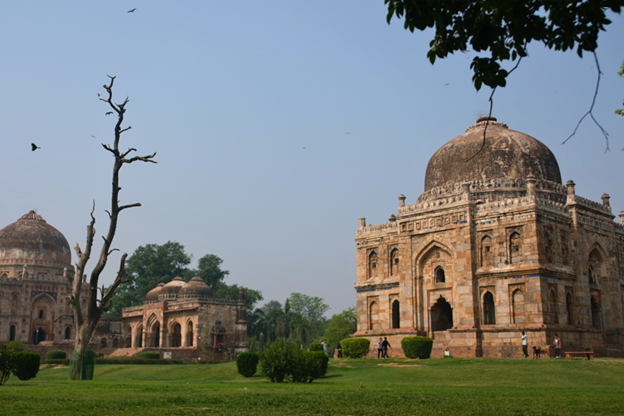
Just nearby, Lodhi Garden offers a completely different atmosphere.
Historic tombs, mosques and bridges built during the 15th-century Sayyid and Lodhi period sit among green pathways, trees, and locals enjoying morning walks or picnics. It creates an interesting contrast.
For one hour, you are looking at contemporary public art. Next, you are surrounded by centuries of history.
Khan Market
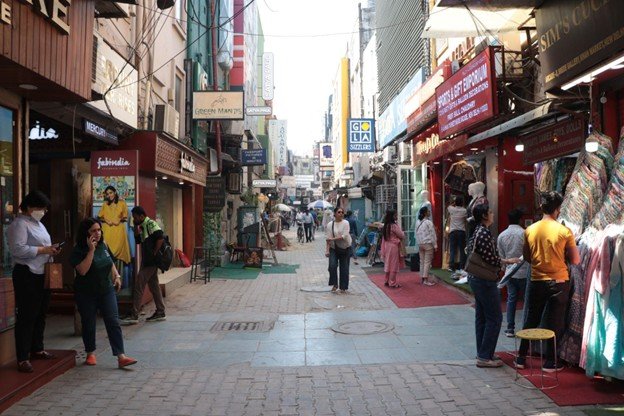
A short drive away, Khan Market offers cafés, bookstores, shopping, and places to slow down after walking through Lodhi Colony.
Many visitors combine coffee, lunch, or browsing shops with their art district visit.
Together, these attractions showcase a different side of the capital and can easily be included alongside other top places to visit in Delhi.
Discover Delhi Through Art
Seeing More Than Just the Murals
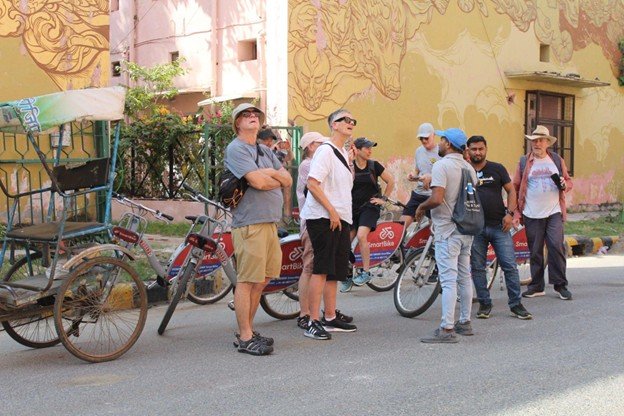
Lodhi Colony is easy to explore independently. You can wander through the streets, photograph murals, and enjoy Delhi’s colourful outdoor gallery at your own pace.
But here’s the thing: Lodhi Colony can feel like a lot of colour without context if you don’t know what you’re looking at. Who chose this wall? Why this artist? What is that symbol actually referencing? Walking past a mural about India’s water crisis without knowing that’s what it is like reading a poem in a language you half-speak. You catch the feeling but miss the meaning.
That gap between seeing and understanding is exactly what a good guide closes, and in a neighbourhood this dense with stories, it makes all the difference.
Lodhi Colony doesn’t ask you to be impressed. It just is what it is — and somehow that makes it more impressive.